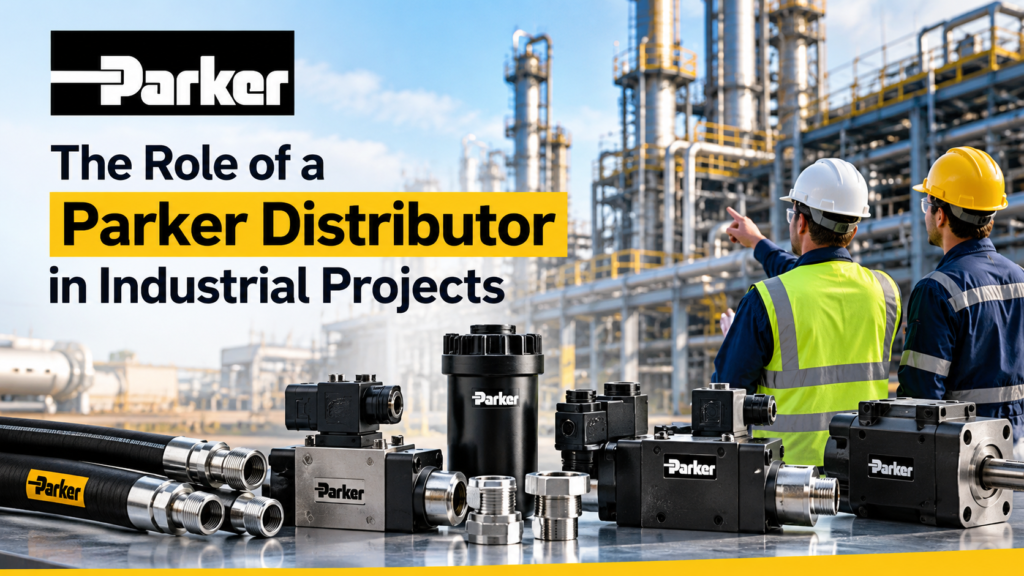
A Parker distributor supplies, configures, and supports Parker Hannifin’s motion and control technologies—including hydraulics, pneumatics, filtration, and fluid connectors—for industrial projects. Beyond product sales, a Parker distributor provides engineering support, inventory management, and technical troubleshooting, helping companies reduce downtime and integrate components correctly into larger systems.
Industrial projects rarely fail because of one catastrophic decision. They fail because of dozens of small ones—an incompatible fitting, a delayed shipment, a hydraulic system sized incorrectly for the application. These details accumulate, and when they go unmanaged, timelines slip and budgets balloon. This is where a Parker distributor earns its place on a project team.
Parker Hannifin has built its reputation on manufacturing components that keep machinery moving: pumps, valves, cylinders, seals, and filtration systems used across manufacturing, aerospace, agriculture, and energy. But Parker itself doesn’t typically sell directly to every end user. Instead, a network of authorized distributors bridges the gap between Parker’s catalog and the specific needs of a job site, a factory floor, or an engineering team.
This post breaks down what a Parker distributor actually does, why their involvement matters for complex projects, and how to decide whether partnering with one makes sense for your next initiative.

What does a Parker distributor actually do?
A Parker distributor is an authorized reseller and technical partner for Parker Hannifin products. Their role extends well past order fulfillment. Most distributors handle:
- Product sourcing and inventory: Maintaining stock of commonly needed components so projects aren’t held up waiting on manufacturer lead times.
- System design support: Helping engineers select the correct valve, actuator, or hose assembly for a given pressure, flow, or environmental requirement.
- Custom assembly: Building hose assemblies, manifolds, or filtration systems to project specifications rather than shipping generic parts.
- Technical troubleshooting: Diagnosing failures in existing hydraulic or pneumatic systems and recommending fixes.
- Training and documentation: Educating maintenance teams on proper installation and upkeep to extend component life.
In short, a Parker distributor functions less like a vendor and more like an extension of the engineering team—one that happens to specialize in fluid power and motion control.
Why do industrial projects rely on a Parker distributor instead of buying direct?
Scale and complexity make direct manufacturer relationships impractical for most mid-sized projects. Parker Hannifin produces thousands of SKUs across dozens of product categories. Few single buyers have the volume or the technical bandwidth to navigate that catalog alone.
A Parker distributor solves three recurring project problems:
1. Speed. Distributors stock regionally, which means a failed seal or burst hose doesn’t translate into a week of downtime waiting for a factory shipment. Many can turn around custom hose assemblies same-day or next-day.
2. Compatibility. Industrial systems are rarely built from a single manufacturer’s parts. A distributor’s engineers understand how Parker components interact with existing equipment, reducing the risk of specifying a part that doesn’t fit the system’s pressure rating or connection type.
3. Accountability. When something goes wrong mid-project, having a single point of contact who understands both the product line and the application saves time that would otherwise go into back-and-forth with a manufacturer’s general support line.
Choose a Parker distributor over buying direct if your project involves custom configurations, tight timelines, or ongoing maintenance needs. Buying direct can make sense for standardized, high-volume orders where customization and local support matter less.
What industries depend most on Parker distributors?
Parker Hannifin’s product range touches nearly every sector that uses fluid power or motion control, but a few industries lean on distributor relationships especially heavily:
Manufacturing and automation
Production lines depend on consistent uptime. A Parker distributor supporting a manufacturing client typically keeps critical spare parts on hand and may offer scheduled maintenance checks to catch wear before it causes a line stoppage.
Construction and heavy equipment
Hydraulic systems on excavators, cranes, and loaders take continuous abuse. Distributors serving this sector often specialize in field repairs and mobile hose replacement services, since equipment downtime on a job site carries a direct cost.
Agriculture
Seasonal equipment demands mean agricultural operations need rapid turnaround during planting and harvest windows. A distributor with strong local inventory can mean the difference between a half-day repair and a lost week of fieldwork.
Energy and oil & gas
These environments require components rated for extreme pressure, temperature, and corrosive conditions. Distributors serving energy clients typically carry deeper expertise in Parker’s specialized sealing and filtration lines built for these demands.
How does a Parker distributor support a project from start to finish?
A well-run distributor relationship typically follows a predictable arc, though the depth of involvement depends on project complexity.
Pre-project consultation
Before any parts are ordered, a good distributor reviews system requirements—pressure ranges, flow rates, environmental exposure—and flags potential issues early. This step prevents costly mid-project redesigns.
Sourcing and customization
Once requirements are set, the distributor sources components, which may include custom-built hose assemblies, cylinders, or filtration skids tailored to the application rather than generic off-the-shelf parts.
Installation support
Many distributors offer on-site technical assistance during installation, particularly for complex hydraulic or pneumatic systems where a wiring or fitting mistake could cause system failure after startup.
Ongoing maintenance and emergency support
After the project launches, the relationship typically shifts toward maintenance. This might include scheduled inspections, replacement part stocking, or emergency repair services for unplanned downtime.
Teams that skip the pre-project consultation step are often the ones who discover compatibility issues after installation—when fixes are far more expensive.
What should you look for when choosing a Parker distributor?
Not all distributors offer the same depth of service. When evaluating one for a project, consider:
- Authorized status: Confirm the distributor is officially authorized by Parker Hannifin, which ensures access to genuine parts and manufacturer-backed warranties.
- Technical expertise: Ask whether their engineers hold product-specific certifications or specialize in the systems relevant to your project (hydraulics, pneumatics, filtration, etc.).
- Local inventory and turnaround time: A distributor with regional stock and fast assembly capabilities reduces downtime risk significantly.
- Industry experience: A distributor familiar with your sector will anticipate issues that a generalist might miss.
- Service scope: Determine whether they offer field service, training, or only parts fulfillment, depending on what your project actually needs.
Choose a distributor with strong local inventory if uptime is your top priority. Choose one with deep engineering support if your project involves custom or first-of-its-kind system design.
Making the right call for your next project
Industrial projects succeed or stall based on details most people never see—the right valve sized correctly, the hose assembly built to spec, the maintenance plan that catches a problem before it becomes a shutdown. A Parker distributor exists to manage exactly these details, combining access to Parker Hannifin’s product catalog with the technical judgment to apply it correctly.
Before your next project kicks off, take inventory of where your current parts sourcing and technical support fall short. If lead times, compatibility issues, or maintenance gaps have caused problems in the past, a conversation with an authorized Parker distributor is a reasonable next step toward closing those gaps before they cost you time or budget.
Frequently asked questions
What is the difference between a Parker distributor and buying directly from Parker Hannifin?
A Parker distributor offers local inventory, custom assembly, and hands-on technical support, while buying direct from Parker Hannifin typically suits large-volume, standardized orders without the need for local service or customization.
How much does it cost to work with a Parker distributor?
Costs vary based on the scope of service, ranging from simple parts purchases at standard markup to ongoing maintenance contracts. Most distributors provide project-specific quotes after reviewing system requirements.
How long does it take to get custom hose assemblies or configured parts?
Turnaround time depends on the distributor’s local capabilities, but many offer same-day or next-day assembly for common configurations, compared to longer lead times when ordering custom parts directly from the manufacturer.
What are the risks of not using an authorized Parker distributor?
Working with an unauthorized reseller can mean counterfeit or mismatched parts, voided warranties, and a lack of access to manufacturer technical support, all of which increase the risk of system failure.
Who typically needs a Parker distributor versus handling procurement in-house?
Companies with in-house engineering teams and high-volume, standardized needs may manage procurement internally, while those facing custom system requirements, tight maintenance windows, or limited technical staff generally benefit more from a distributor relationship.